




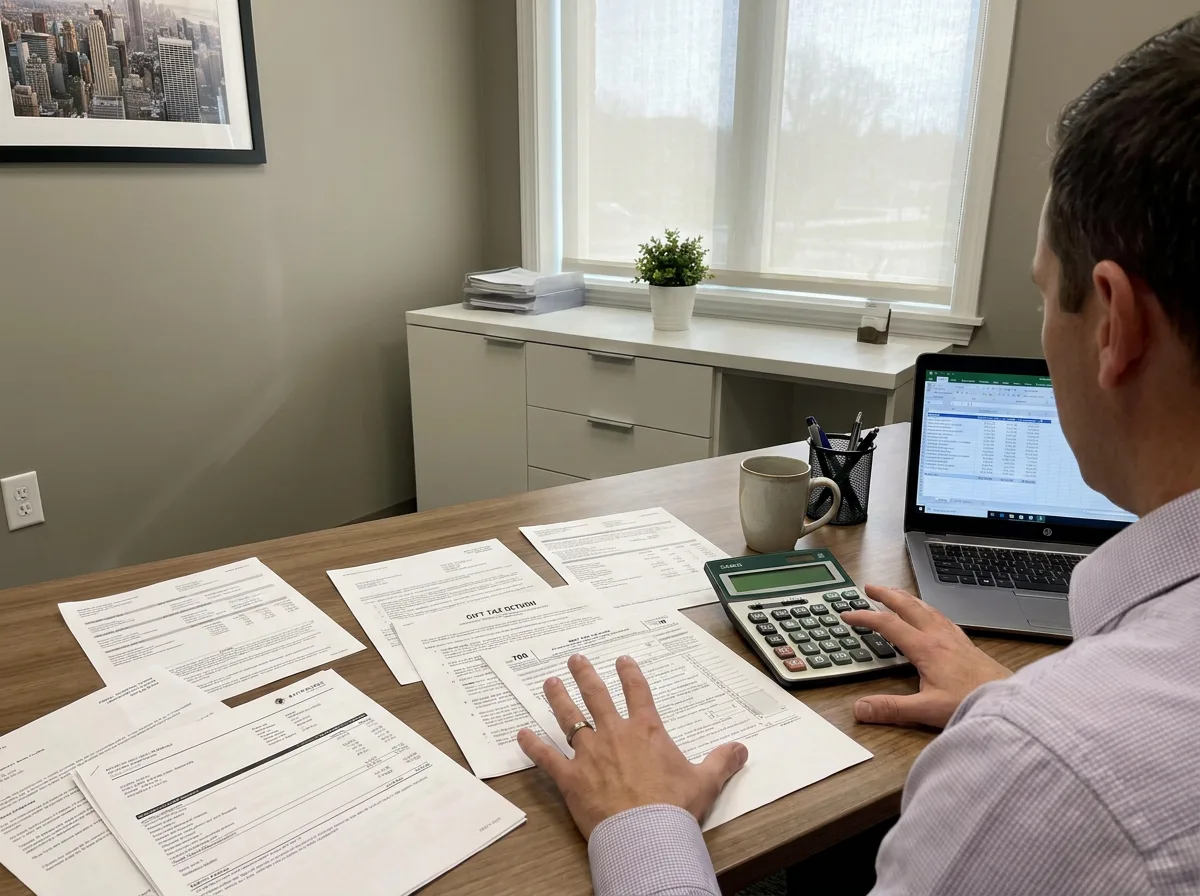
Responsive, professional, first class deliverables -- especially considering that that the appraised assets are extremely complex financial assets with little by way of comps. The deliverable satisfied my accountants and advisers as being more than adequate to support the valuation needed to complete a conversion to a Roth IRA
USPAP CERTIFIED
Business Valuation Services
Business valuation services for estate tax, gift tax, charitable donations, and IRA conversions, and other legal and tax settings. Equity Business Valuation Services offers certified appraisal reports across industries including real estate, technology, services, consumer, and more and delivers the documentation you need for a defensible business appraisal.
What We Appraise
Business Valuation Services
Our ASA and NACVA-certified appraisers deliver defensible valuations for tax compliance, financial reporting, and litigation. Every report follows USPAP standards and is built to withstand IRS scrutiny.
Charitable Donation
Qualified appraisals for donated business interests, prepared for IRS Form 8283 noncash charitable contributions.
Divorce
Impartial business valuations for marital dissolution and equitable distribution, prepared for attorneys, mediators, and courts.
Estate Planning
Business valuations that anchor trust funding, buy-sell agreements, and lifetime gifting strategies.
Estate Tax
USPAP-compliant valuations for IRS Form 706 filings, determining fair market value at the date of death.
Gift Tax
Qualified appraisals for IRS Form 709 reporting, supporting valuation discounts on gifted business interests.
Client feedback
What Our Clients Say
The team was highly knowledgeable, helpful, and efficient. I highly recommend their appraisal services, especially for private companies.
I found them professional & responsive. The report was quite thorough as well.
Get Your Business Valued Today
Our USPAP-compliant appraisals are accepted by the IRS, lenders, and courts. Whether you need a valuation for estate tax, gift tax, or IRA conversion purposes, we deliver defensible results.
Insights
Business Valuation Guides & Insights
Expert reads on valuation discounts, minority interests, and donating private company stock.

Valuing Claude's Anthropic: A Business Valuation Look at Pre-IPO Roth Conversions
A Roth IRA conversion involving pre-IPO shares is a taxable event, and the pre-IPO valuation for Roth IRA conversion purposes sets exactly how much tax you owe today versus what grows tax-free later. This guide walks through the market, income, and asset approaches appraisers use, and explains why funding-round pricing or rumored IPO prices can't substitute for a defensible fair market value.
Read more →
Valuing a Minority Limited Partnership Interest When the Fund Won't Share Data
Minority limited partnership interest valuation gets complicated fast when a general partner withholds portfolio-level detail. Here is how we build a defensible Form 706 or Form 709 valuation using the data that is actually available, plus properly documented DLOC and DLOM discounts.
Read more →
FLP Valuation Discounts: How Lack of Marketability and Minority Interest Are Determined
A family limited partnership interest is routinely worth less than its pro rata share of the underlying assets, and the gap comes from two distinct, separately substantiated discounts. This guide explains how minority interest and lack of marketability discounts for FLP interests are determined, documented, and defended against IRS challenge.
Read more →
What Is an Excess Benefit Transaction Under IRC Section 4958, and How Does a Valuation Help?
An excess benefit transaction valuation gives your board the independent comparability data it needs to satisfy the IRC Section 4958 safe harbor and shift the burden of proof to the IRS. Here's how the penalties work, what the three-part rebuttable presumption requires, and where an appraisal fits.
Read more →
Family Limited Partnership Valuation Discounts: What Drives Them and How to Defend Them
Family limited partnership valuation discounts hinge on two factors: lack of control and lack of marketability. This guide explains what drives each discount, how they combine, and what makes a valuation defensible enough to survive an IRS estate or gift tax audit.
Read more →
Discount for Lack of Control vs. Marketability: How the Two Valuation Discounts Differ
A discount for lack of control accounts for decision-making power a minority owner doesn't have, while a discount for lack of marketability accounts for how hard that ownership stake is to sell. This guide shows how our appraisers calculate and combine both discounts, with a worked example the IRS and courts would recognize.
Read more →
Estate Tax Portability: The DSUE Election and Why You Need a Defensible Appraisal
Estate tax portability lets a surviving spouse claim a deceased spouse's unused $15 million exclusion, but only through a timely Form 706 election, and the value reported on that return has to hold up to scrutiny.
Read more →
Minority Discount or Pro Rata Value? Valuing a Partnership Buyout
Whether a partnership buyout is valued as a discounted minority interest or a pro rata share of enterprise value depends on your governing agreement and the standard of value it invokes, not on which number feels fairer to either side. This guide explains how appraisers determine which standard applies and what that decision does to the buyout price.
Read more →
When Do You Need a Business Valuation for a Portugal Golden Visa or D2 Visa?
A business valuation for Portugal Golden Visa applications is not a legal filing requirement on its own, but it becomes essential documentation whenever your investment route involves buying into, capitalizing, or founding a Portuguese company. This guide explains which routes typically call for a valuation and what a USPAP-compliant report should include.
Read more →
Business Valuation for E-2 Visa Petitions: When Does It Strengthen Your Case?
A business valuation isn't a checkbox requirement for an E-2 visa petition, but it's often the strongest evidence you can offer for substantial investment and capital at risk. Here's when USCIS officers actually rely on one, and what L-1 and EB-5 petitions need instead.
Read more →
When Do You Need a Business Valuation for IRS Form 3520 Reporting?
A business valuation for IRS Form 3520 establishes the fair market value of a foreign gift, bequest, or trust distribution involving a business interest. This guide explains when that valuation is required, what documentation it needs, and how it fits alongside your CPA's filing.
Read more →
Who Bears the Burden of Proof in an IRS Gift Valuation Audit?
In most IRS gift valuation audits, the burden of proof in an IRS gift valuation dispute starts with the taxpayer. This guide walks through the three specific moves, adequate disclosure, a qualified appraisal, and credible evidence under IRC 7491(a), that can shift it to the government.
Read more →
Business Valuation for Divorce: How Appraisers Determine a Defensible Number
A business valuation for divorce hinges on which legal standard a state applies (fair market value or fair value) and on separating personal goodwill from divisible enterprise value. This guide breaks down the classification, goodwill, and methodology decisions that determine whether a valuation report holds up in court.
Read more →
Equity Value vs Enterprise Value: Why Business Owners Confuse These Numbers
Equity value and enterprise value measure two different things, and mixing them up can distort a deal price or misstate the taxable value on an estate or gift tax return. This guide walks through the bridge formula that connects them, with a worked numeric example.
Read more →
The 3 Approaches to Valuing a Business: Asset, Income, and Market Explained
Every credentialed business appraiser works from three recognized approaches to valuing a business: asset, income, and market. This guide explains what each measures, when it applies, and how appraisers reconcile them into one defensible conclusion of value.
Read more →
Valuing S Corporations: Tax Affecting, Gross v. Commissioner, and the IRS Job Aid
Valuing an S corporation hinges on whether you tax affect its earnings, a question the Tax Court, the Sixth Circuit, and the IRS have each answered differently since 1999. This guide walks through Gross v. Commissioner, the IRS's 2014 Job Aid, and why no fixed premium or discount replaces a facts-and-circumstances analysis.
Read more →
How We Apply IRS Rev. Rul. 59-60 to Value Limited Partnership Interests
Our valuation firm applies IRS Rev. Rul. 59-60 as the governing framework for valuing limited partnership interests, including Qualified Opportunity Fund LP interests, and this guide explains how the ruling's eight factors, and DLOC and DLOM discounts, shape a defensible report.
Read more →
Qualified Opportunity Fund Minority Interest Valuation: How Discounts Cut Your Tax Bill
A qualified opportunity fund minority interest valuation can lower the taxable gain you recognize when your deferral period ends on December 31, 2026. This guide explains how discounts for lack of control and marketability work, what documentation your appraiser needs, and who can prepare a defensible report.
Read more →
Donating Private Company Stock to Charity: Lessons From the Hoensheid Case
Donating private company stock to charity can produce a substantial tax deduction, but the IRS has disallowed deductions over bad timing, unqualified appraisers, and incomplete Form 8283 paperwork. This guide uses Estate of Hoensheid v. Commissioner to show donors exactly what to get right.
Read more →
FAQ
Frequently Asked Questions
What is fair market value in a business appraisal?
Fair market value is the price at which a business would change hands between a willing buyer and a willing seller, neither under pressure to buy or sell and both having reasonable knowledge of relevant facts. This is the standard required by the IRS for estate tax, gift tax, and charitable contribution valuations. Our appraisers determine fair market value using recognized approaches including the income, market, and asset methods.
Why do I need a business valuation for estate tax purposes?
The IRS requires a defensible business valuation on Form 706 (Estate Tax Return) when a business interest is included in a taxable estate. An accurate, well-documented valuation can significantly reduce estate tax liability and provides the documentation needed to support your filing. A poorly supported valuation invites IRS audit and potential penalties.
Are your appraisals accepted by the IRS and lenders?
Yes. Our appraisers hold ASA (American Society of Appraisers) certification and prepare all valuations in compliance with USPAP (Uniform Standards of Professional Appraisal Practice). Our reports are built to withstand IRS scrutiny, and they are routinely accepted by lenders, courts, and insurance carriers for their intended purposes.
What is included in a business valuation report?
Our reports include a comprehensive analysis of the business, market conditions, financial statements, and the valuation methods used to reach the conclusion of value. Each report documents the appraiser's credentials, the intended use of the appraisal, the effective date of valuation, and a detailed explanation of the reasoning and supporting evidence. The final report is signed and certified by our ASA-certified appraiser.
How long does a business valuation take?
Timeline depends on the complexity of the business, availability of financial records, and how quickly we receive the required information from you. Most valuations are completed three to five weeks after engagement, and expedited delivery, as fast as 11 business days, is available for hard deadlines. Contact us with your deadline, and we will confirm whether we can meet it.
Can I use the same valuation for multiple purposes (estate tax, gift tax, IRA conversion)?
In many cases, yes, provided the effective date of the valuation aligns with the IRS deadline for each purpose. However, different intended uses may require different analysis or supporting documentation. We recommend discussing your specific situation with our appraisers so we can prepare a single report that satisfies all your purposes or identify whether separate valuations are needed.
What makes your business valuations defensible?
We follow rigorous appraisal methodology, document all assumptions and supporting evidence, and adhere to USPAP standards throughout the engagement. Our appraisers are ASA-certified, which means they have met stringent education, experience, and ethical requirements. We analyze industry comparables, financial performance, owner compensation, and market conditions so that our conclusions stand up to IRS examination.
Request a Business Valuation
Tell us about the business interest and the purpose behind the valuation, and we'll follow up with a fixed-fee quote.